Plastic surgeon

CMP 68891 · RNE 40888
Share your details and our team will contact you to answer your questions and arrange an in-person or virtual evaluation.
You can continue on WhatsApp if you would like immediate assistance, or wait for our team to contact you, answer your questions and guide you through the next steps of your rhinoplasty evaluation with Dr. Ricardo Cruz.
Continue on WhatsAppCMP 68891 · RNE 40888

UNMSM · Hospital Daniel Alcides Carrión


Preservation · Madrid 2023


Rhinoplasty Congress · Buenos Aires 2025
Rhinoplasty is more than an aesthetic change. It requires experience, training and an artistic view of the face. My experience supports an ethical, personalized approach adapted to each patient.
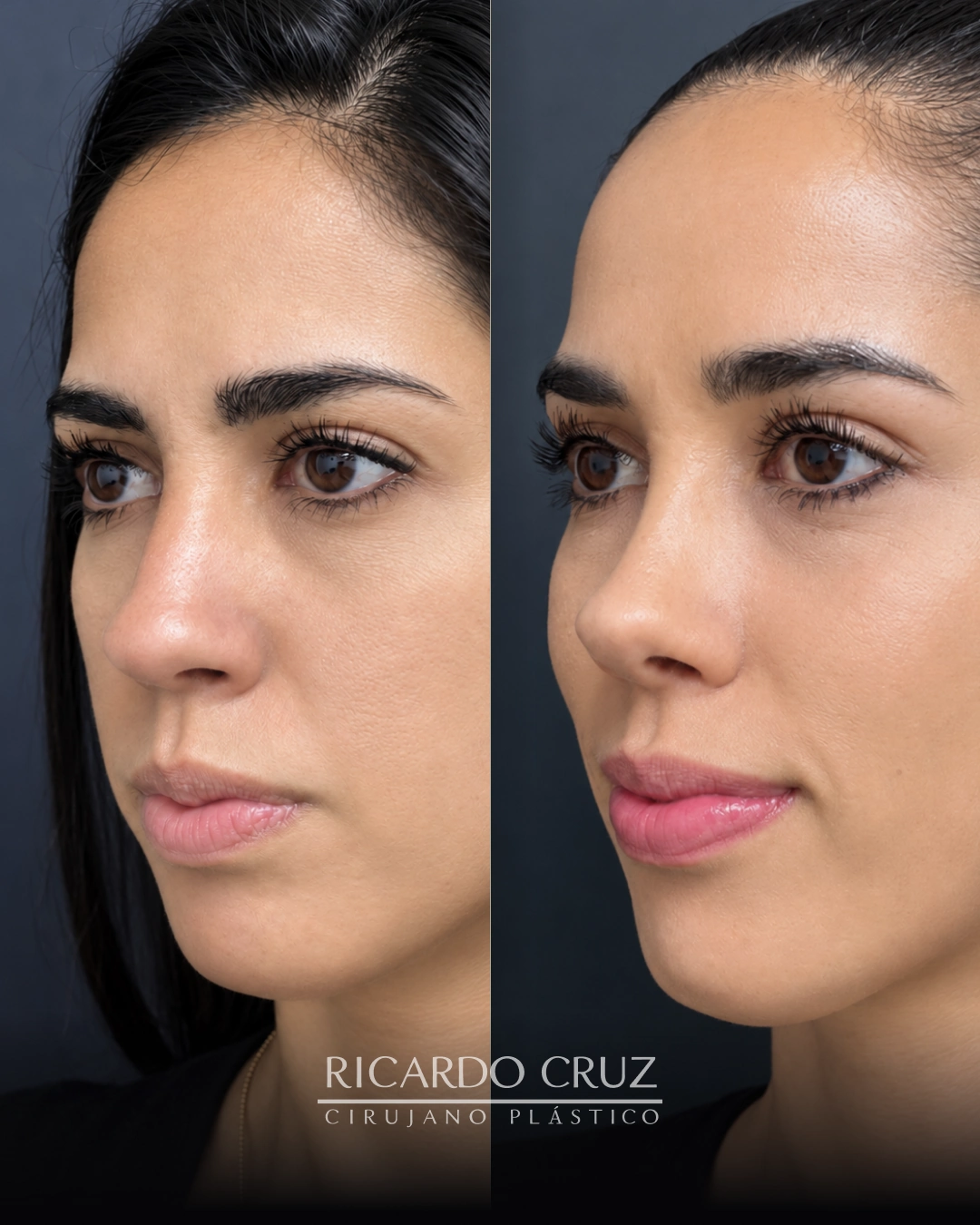
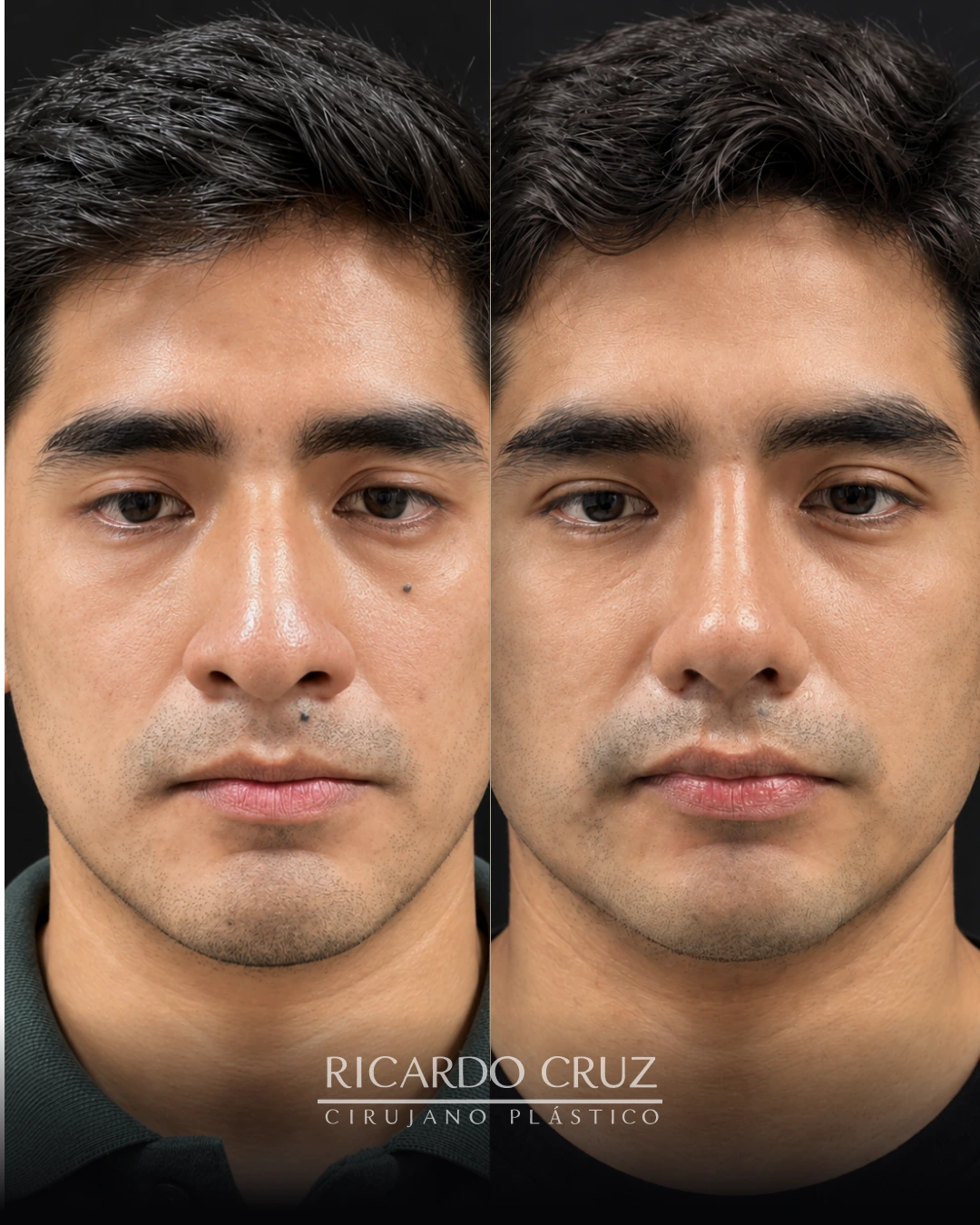
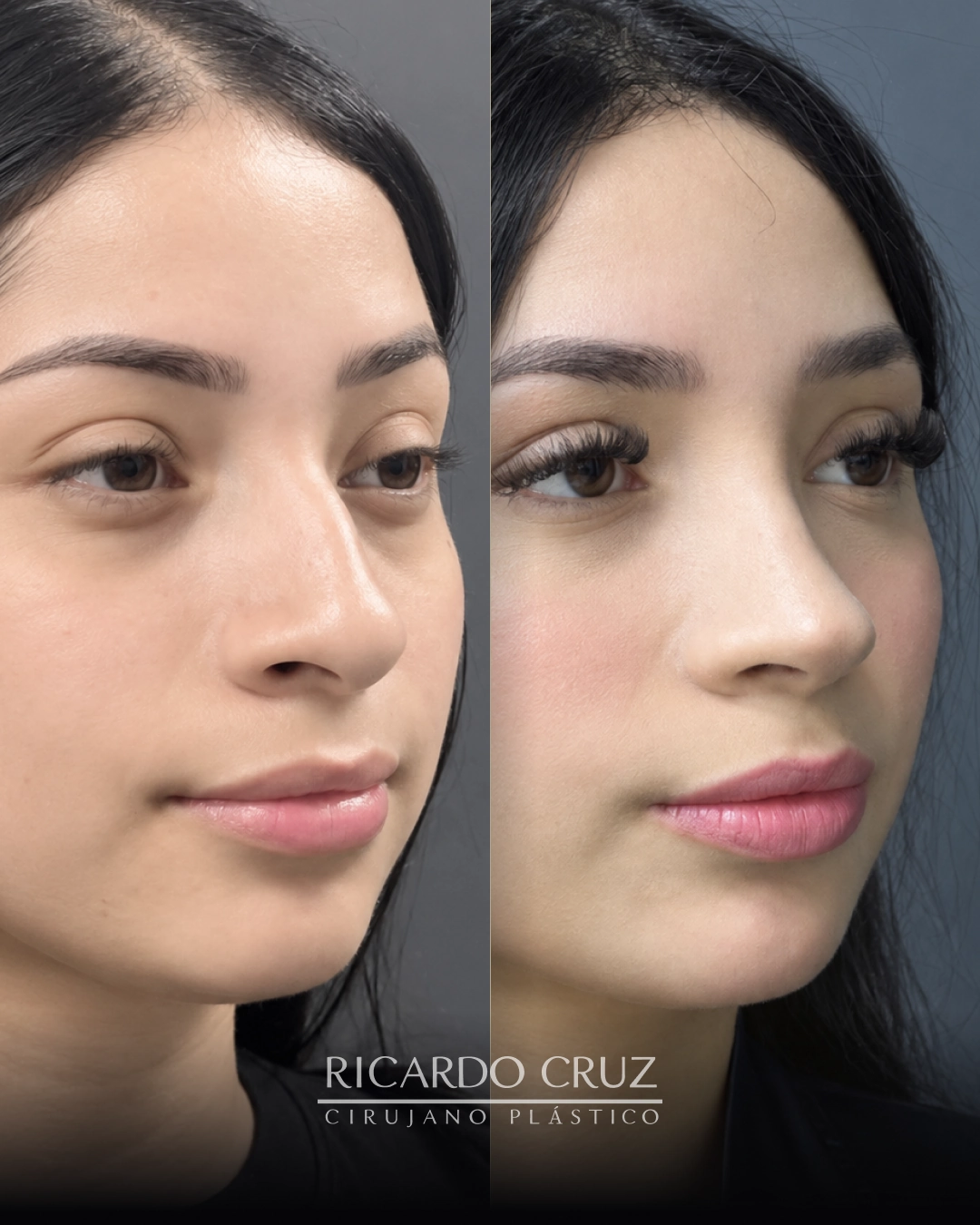
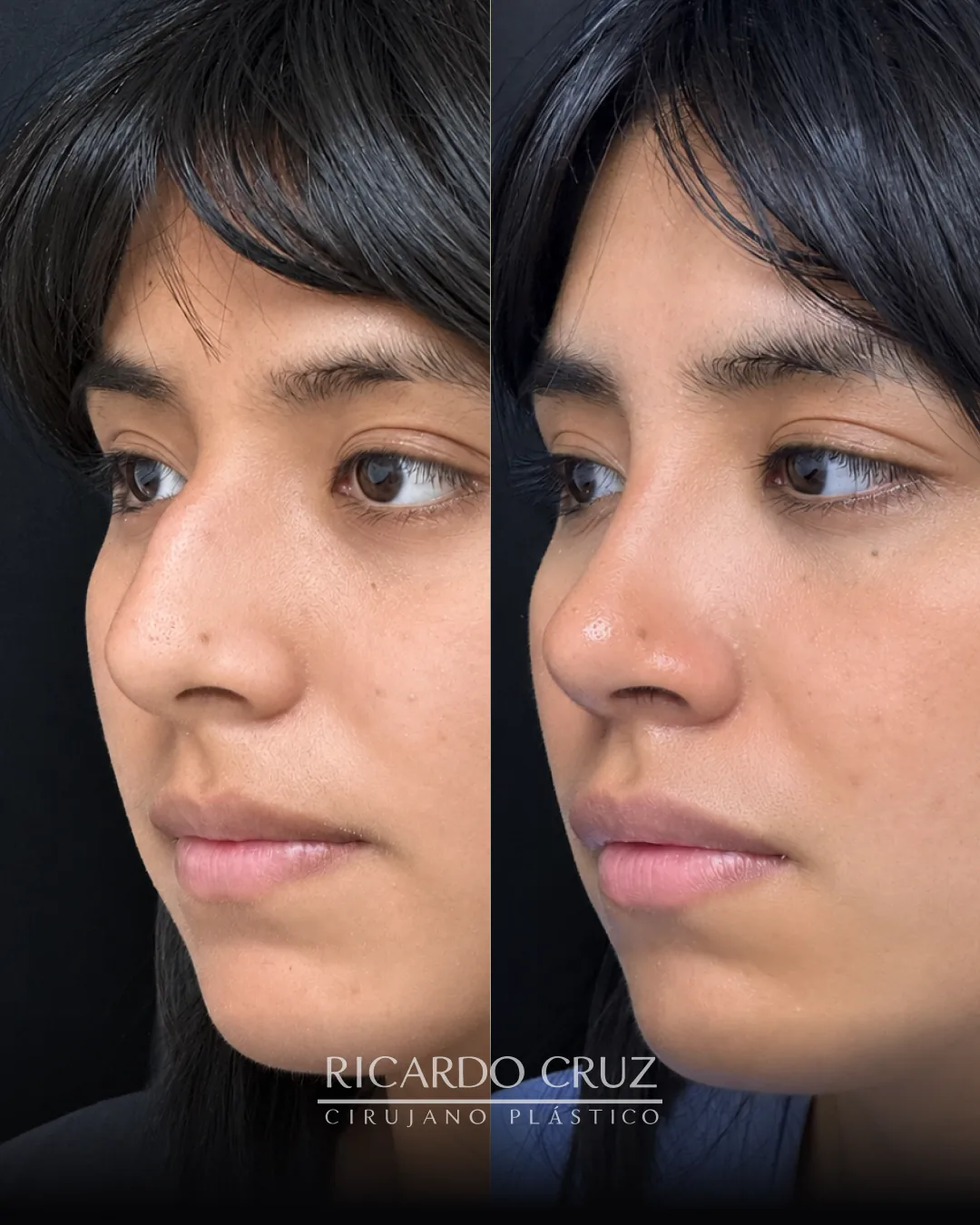
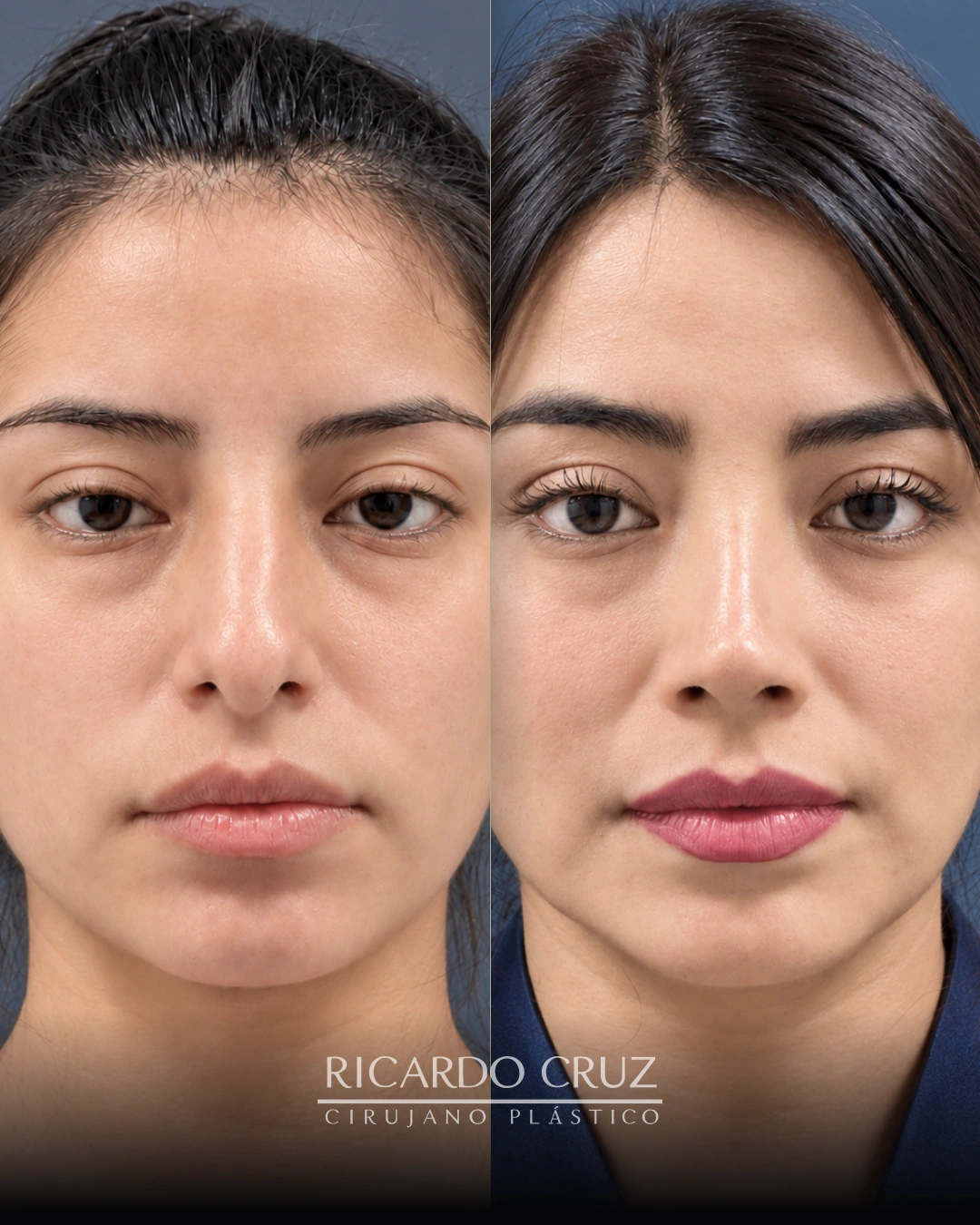
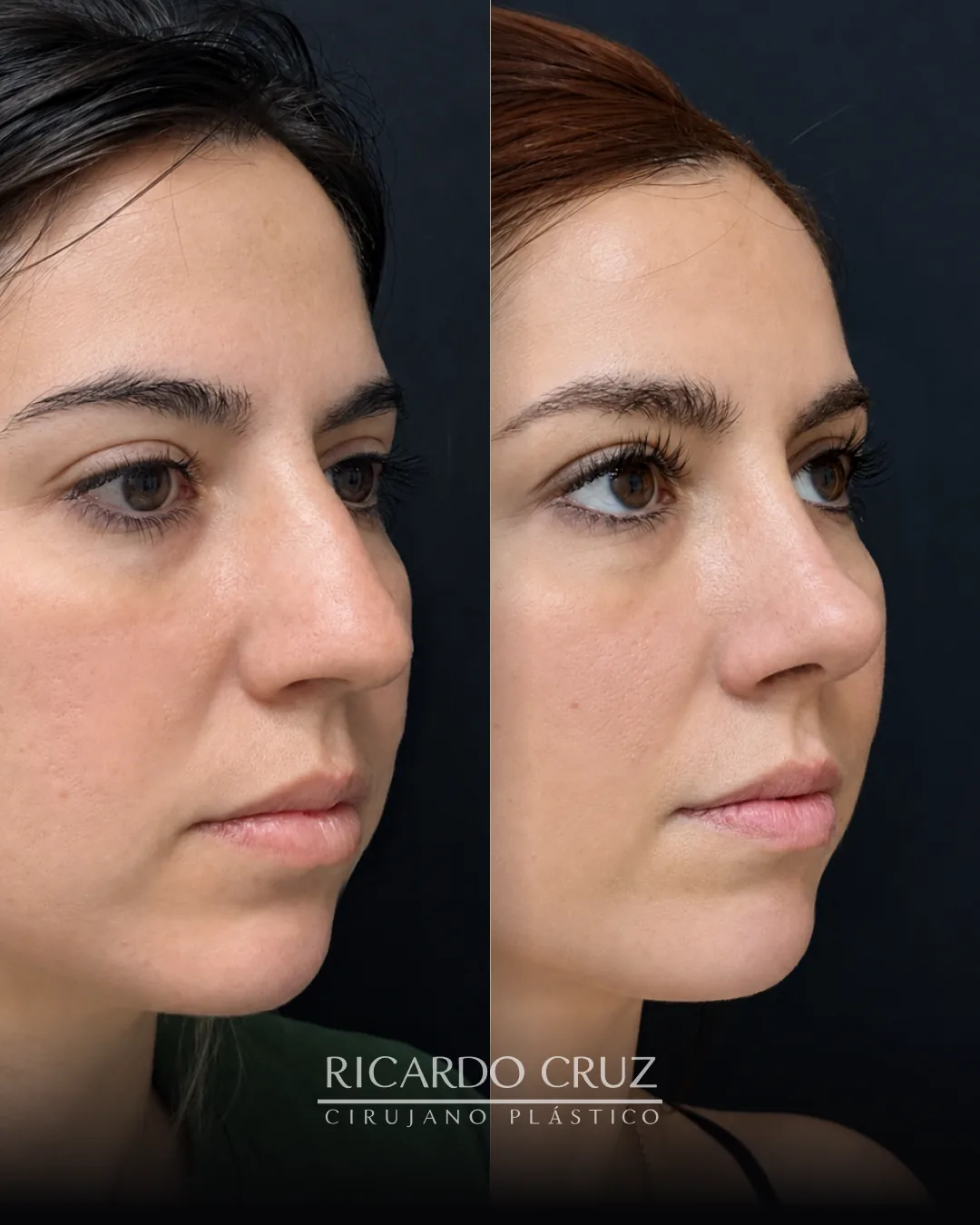
Would you like to know what can be evaluated in your case?
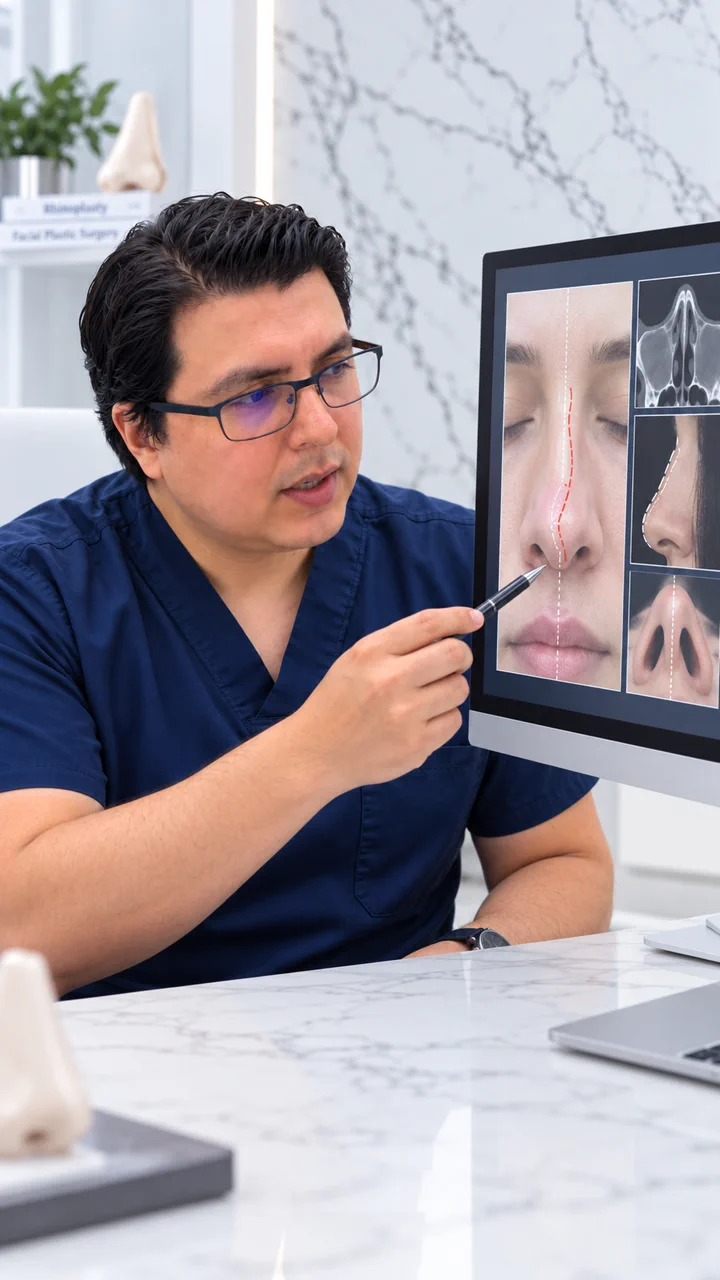
Request an evaluationRhinoplasty is surgery that can modify certain structures of the nose to address its shape, proportions and relationship with the rest of the face. During the evaluation, Dr. Ricardo Cruz examines the bridge, tip, projection, width, asymmetries, skin characteristics and facial proportions to determine which changes may be appropriate for each case.
Not every nose needs the same treatment, and not every aspect can be changed in the same way. The indication and plan are therefore defined individually according to anatomy, medical history and each patient’s goals.
 Bridge
 Tip
 Projection
 Width
 Asymmetries
 Skin
 Facial proportions
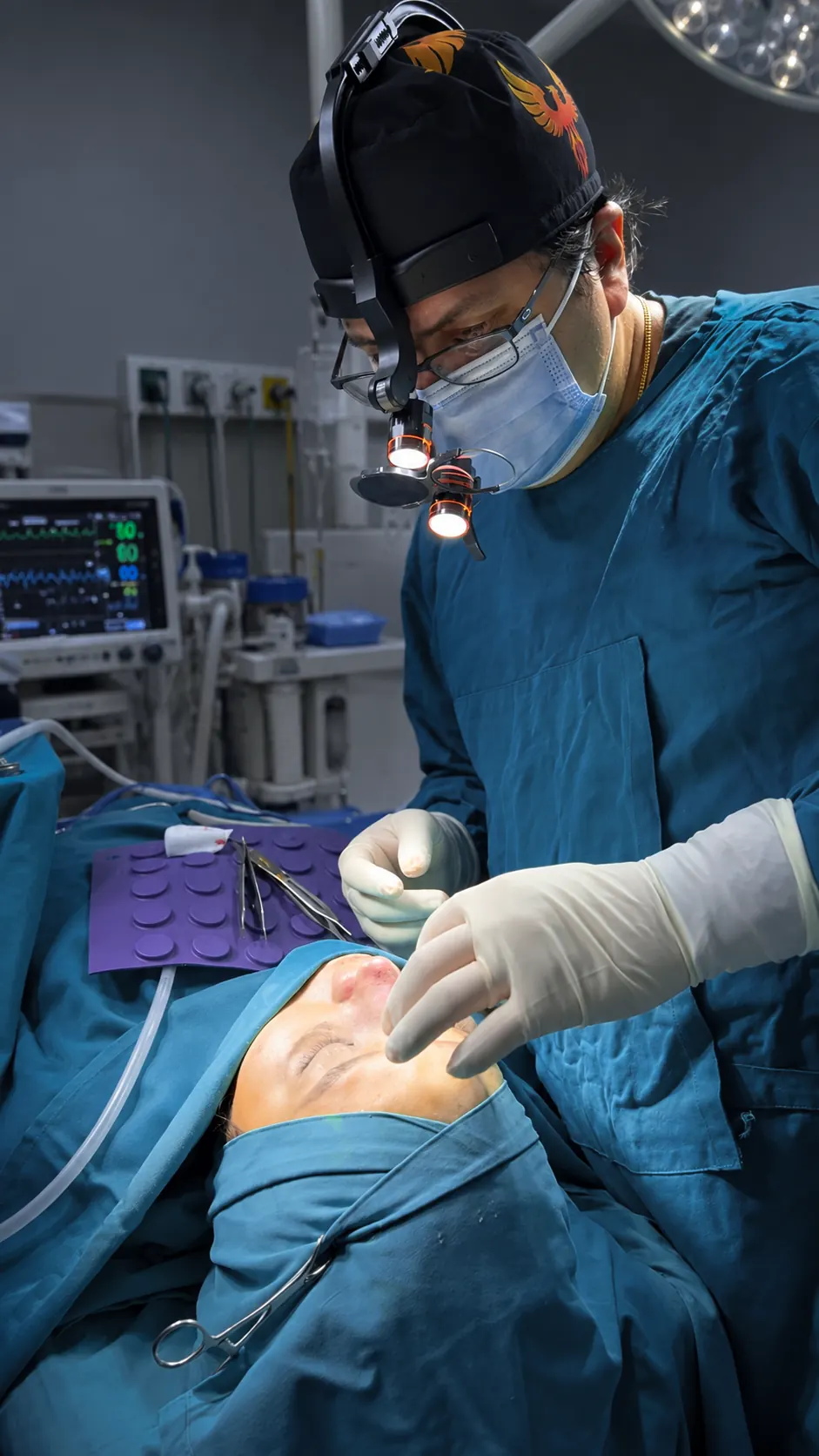
“Rhinoplasty is more than an aesthetic change: it is a procedure that requires training, experience and an artistic vision of the face.”
There is no single technique for every nose. The surgical approach depends on nasal anatomy, skin characteristics, structures that need to be preserved or reinforced, medical history and each patient’s goals.
Dr. Ricardo Cruz may combine different techniques and resources within an individual plan, choosing those most suitable for each case.
Technique
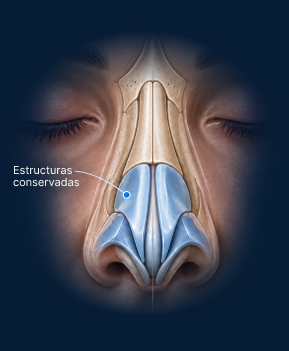
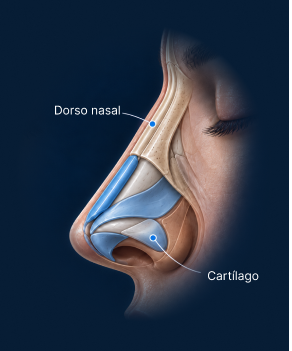
This approach seeks to preserve selected nasal structures when the anatomy and the desired changes allow it.
Whether preservation is suitable depends on an individual assessment of the bridge, tip and structural support.
 Nasal anatomy
 Nasal bridge
 Nasal structures
Technique
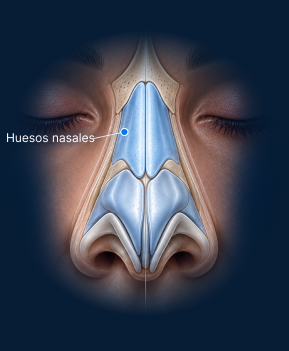
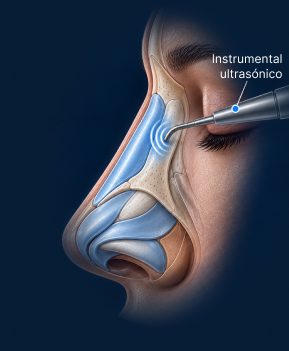
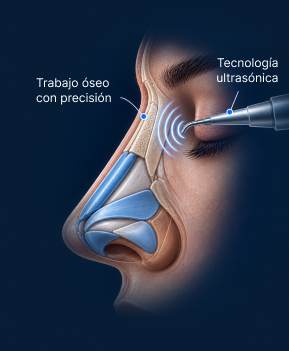
Ultrasonic rhinoplasty uses piezoelectric instruments, a technology that allows certain maneuvers on the nasal bones to be performed with greater precision.
The choice of this technique depends on the bone work required in each case.
 Nasal bones
 Ultrasonic technology
 Precision
Technique
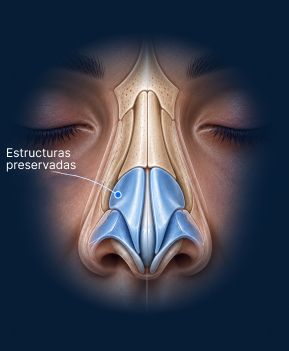
Ultrasonic preservation rhinoplasty combines a preservation approach with ultrasonic technology to retain certain nasal structures and perform the necessary bone work more precisely when the case requires it, integrating both resources into one surgical plan.
The choice of this technique depends on each patient’s anatomy and specific needs.
Nasal structuresUltrasonic technology Surgical planning
Technique
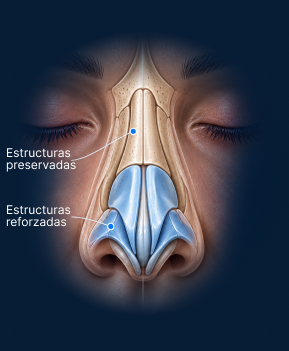
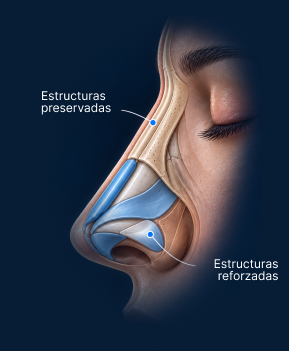
Hybrid rhinoplasty combines principles of preservation and structural surgery when a nose needs to retain certain structures while others must be modified or reinforced.
The choice and combination of these techniques depend on each patient’s anatomy and specific needs.
 Preservation
 Structural surgery
 Personalized planning
Technique
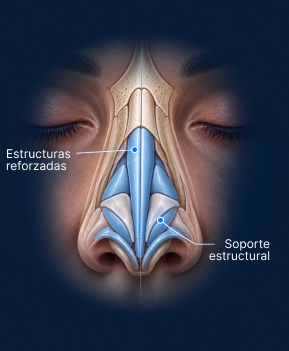
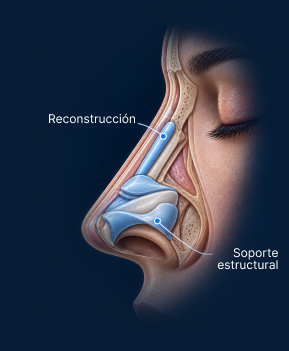
Structural rhinoplasty is used when the nose needs reinforcement, reconstruction or greater support in one of its parts. Rather than changing only its external shape, it also addresses the internal structures that help maintain nasal stability.
Unlike preservation approaches, it may require modifying or reconstructing certain structures when needed. The choice of this technique depends on each patient’s anatomy and needs.
 Nasal support
 ReconstructionSurgical planning
Not sure which approach may suit your case?
Request an evaluation
Before choosing a technique, I need to understand what you want to change and what you expect from the procedure. During your evaluation, I analyze your case and explain which options may be considered, their limitations and what surgery involves. My goal is for you to make an informed decision with realistic expectations.
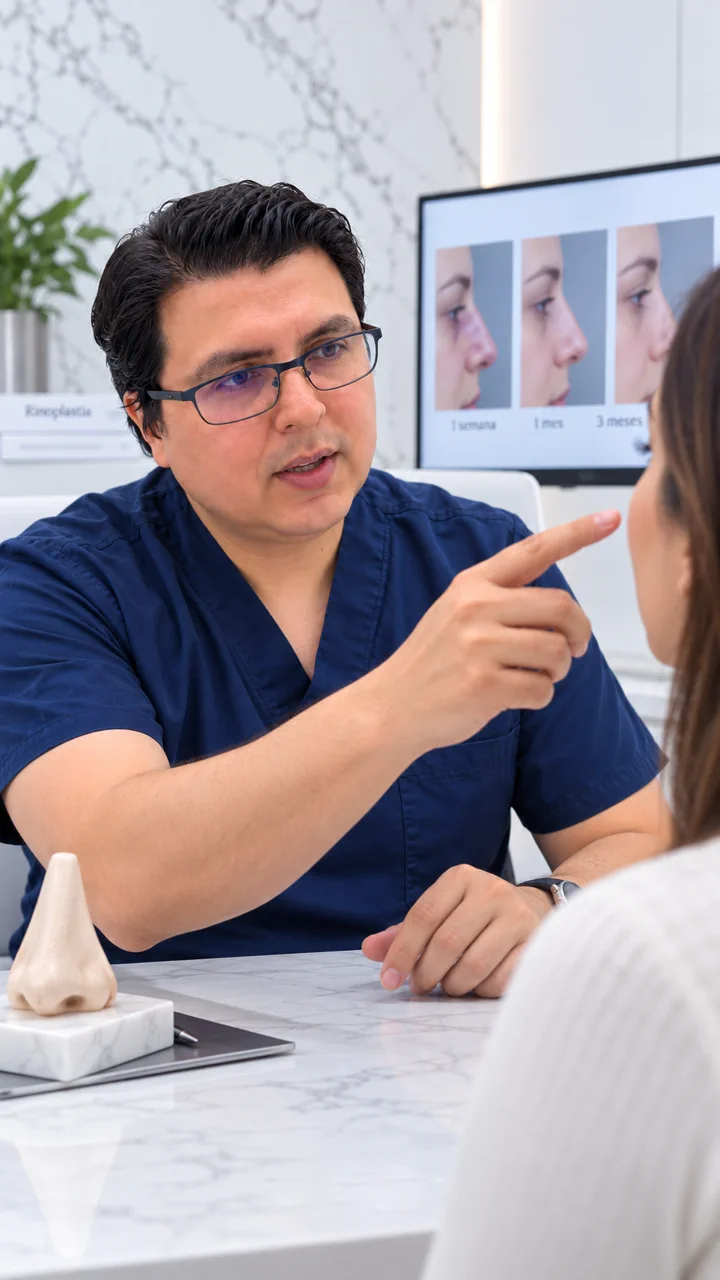
My work does not end in the operating room. Throughout recovery, I continue to support you, answer your questions and review how your nose evolves over time. Each follow-up visit helps me assess whether your recovery is progressing according to the plan we defined together from the start.

The process begins with a personalized medical evaluation and continues through planning, surgery and postoperative follow-up. Each stage helps clarify which approach may suit your anatomy, how to prepare and what recovery may involve.


The evaluation helps us understand what you would like to change and whether rhinoplasty may be appropriate for you. Dr. Ricardo Cruz reviews your nasal anatomy, skin type, facial proportions, medical history and goals.
Previous nasal surgeries, when applicable, and other relevant factors are also considered to define the possibilities and develop an individual surgical plan.
 Whether rhinoplasty may be appropriate for you.Which aspects of the nose can be assessed.Which technique or combination of techniques may be suitable.Which structures should be preserved, modified or reinforced.Which tests and preparation are needed before surgery.Which risks, limitations and expectations matter for your anatomy.
The operation follows the plan defined during your evaluation. The choice of technique depends on your nasal anatomy and on which structures need to be preserved, modified or supported.
Before surgery, your doctor explains the preparation, the expected scope of the procedure and the limitations relevant to your case.
The technique suited to your anatomy.The structures requiring work or support.The medical preparation and instructions before surgery.After surgery, follow-up appointments help review healing, answer questions and adapt care instructions to your progress.
Swelling gradually changes and the nose continues to evolve over time. The pace of recovery and return to activities varies for each patient.
Review the early recovery period.Guide care and the return to activities.Observe how the result evolves over time.Patient: Joi Sánchez
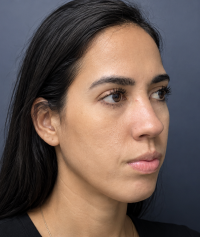 Before
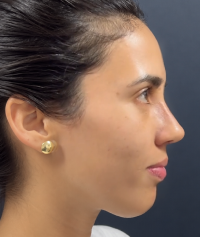 1 week
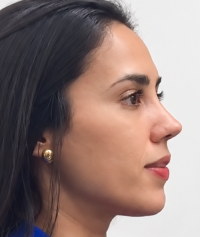 3 months
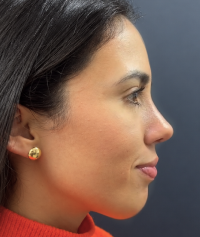 6 months
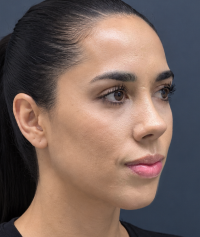 1 year
Short videos in which Dr. Ricardo Cruz explains common questions, before-and-after situations and cases that call for an individual assessment.
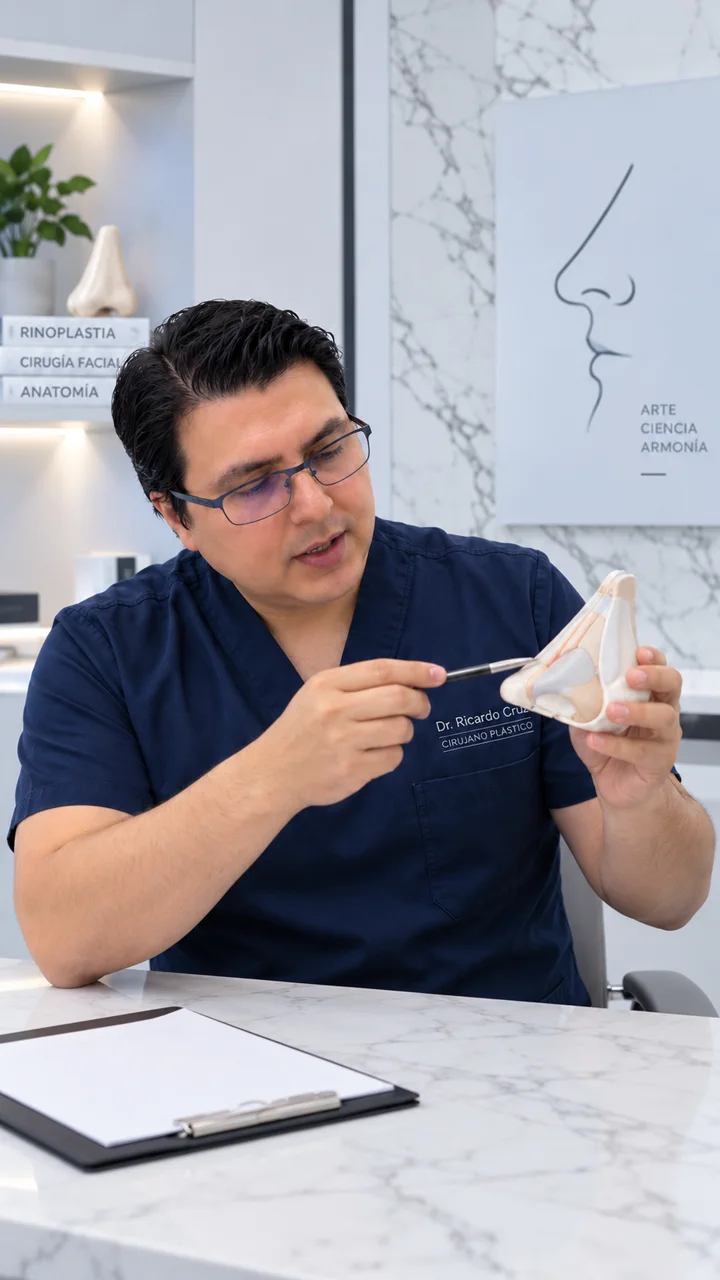 Common questionThe video could not be played. Please try again.
 Clinical caseThe video could not be played. Please try again.
 Common questionThe video could not be played. Please try again.
 Clinical caseThe video could not be played. Please try again.
The cost of rhinoplasty in Lima can vary according to your anatomy, the complexity of the case, the technique selected and the resources needed for surgery. After your evaluation and surgical plan are defined, you will receive a final estimate detailing what is included and any possible additional costs.
The type of rhinoplasty and technique are not determined by the aesthetic change you want alone. The evaluation considers your nasal anatomy, skin type, internal structures, medical history, previous surgeries and goals to define which approach may suit your case.
Rhinoplasty can be classified in several ways. By purpose, it may be aesthetic, functional or both. By surgical history, it may be primary when it is the first nasal surgery or secondary/revision when there has been a previous operation.
There are also different surgical approaches, such as open or closed rhinoplasty, and techniques including preservation, ultrasonic, hybrid and structural rhinoplasty. The choice depends on the anatomy and needs of each case.
Aesthetic rhinoplasty primarily aims to change the shape and proportions of the nose, while functional rhinoplasty addresses structural issues that may affect breathing. In some patients, both goals can be considered within the same surgical plan. The cost may vary according to the type and complexity of the procedure.
Primary rhinoplasty is a first nasal surgery. Secondary or revision rhinoplasty is performed on a nose that has already been operated on and may require different planning because of changes to its structures.
Changes may be visible from the early stages, but swelling continues to subside and the nose gradually becomes more defined. This process can take several months, and the result may continue to refine until around the first year, depending on the patient.
Yes. A photograph can help explain the changes you are interested in. However, the result must be planned around your own anatomy, facial proportions and surgical possibilities, rather than trying to reproduce someone else’s nose exactly.
“It is not about giving everyone the same nose, but about understanding your anatomy, respecting your features and planning together the result we seek.”
If you are considering rhinoplasty, an evaluation with Dr. Ricardo Cruz can help answer your questions, explore what may be possible in your case and clarify the next steps.






 Watch more videos on TikTok